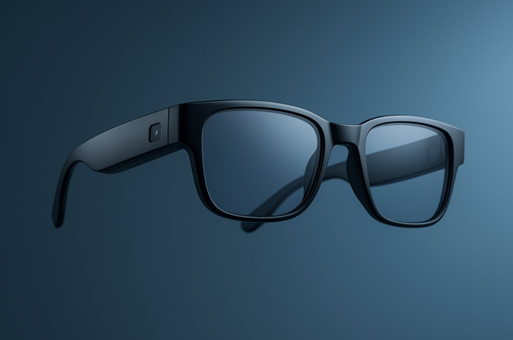
Smart glasses, once a concept reserved for science fiction, are now on the brink of becoming a mainstream reality. Over the last decade, technological advancements have pushed wearable devices from experimental prototypes into powerful tools that blend the digital and physical worlds. As augmented reality (AR), artificial intelligence (AI), and connectivity continue to improve, smart glasses are set to transform industries, enhance daily life, and redefine human-computer interaction.
1. Understanding Smart Glasses
The Future of Smart Glasses Smart glasses are wearable eyewear embedded with technology that allows users to view digital information in their field of vision. Unlike traditional glasses, these devices integrate displays, cameras, sensors, and connectivity features to overlay data, graphics, and even immersive AR experiences directly onto the real world.
While the earliest models were bulky and limited in functionality, modern prototypes are becoming lighter, more stylish, and more powerful. They can perform tasks like translating languages in real time, providing navigation cues, showing notifications, or enabling hands-free video calls.
2. The Evolution of Smart Glasses
The journey of smart glasses began with early concepts like Google Glass in 2013. While Google’s initial attempt was ahead of its time, it faced issues such as privacy concerns, high costs, and limited applications for the average consumer. Despite its short consumer lifespan, it laid the groundwork for enterprise and industrial use.
Over the years, tech giants and startups alike have invested heavily in improving the form factor, battery life, and user interface. Devices like the Microsoft HoloLens, Snap Spectacles, and Meta’s Ray-Ban Stories have shown the potential for blending fashion with cutting-edge technology.
3. Core Technologies Driving the Future
The rapid progress of smart glasses is made possible by a combination of innovations:
-
Augmented Reality (AR) – AR overlays information onto the real world, enhancing work tasks, navigation, and entertainment experiences. Future smart glasses will project lifelike 3D visuals directly into the user’s field of vision.
-
Artificial Intelligence (AI) – AI enables smart glasses to recognize objects, translate text, analyze surroundings, and respond to voice commands intelligently.
-
Miniaturized Hardware – Advances in microprocessors, batteries, and optical displays allow for lighter and more comfortable designs without sacrificing power.
-
5G Connectivity – With faster internet speeds and lower latency, smart glasses can stream high-quality visuals and process cloud-based data seamlessly.
4. Everyday Applications of Smart Glasses
The real promise of smart glasses lies in their versatility. In the near future, they could replace or supplement smartphones in many tasks.
-
Navigation & Travel
Imagine walking through a foreign city with live translation of signs appearing in front of you or turn-by-turn walking directions floating in your view. -
Work & Productivity
In industries like construction, healthcare, and manufacturing, workers can access instructions, schematics, or patient data without looking away from their tasks. -
Education & Training
Students could participate in interactive 3D lessons or receive real-time guidance during practical work. -
Gaming & Entertainment
Augmented reality games could transform real-world locations into interactive game boards, while concerts and sports events could display extra stats and immersive visuals. -
Social Communication
Video calling through your glasses means seeing a friend’s face projected into your view, almost like they’re standing in front of you.
5. Challenges to Overcome
Before smart glasses become a staple in everyday life, several challenges need to be addressed:
-
Privacy Concerns – Built-in cameras and constant data collection raise questions about surveillance and consent.
-
Design & Comfort – Consumers want fashionable eyewear that doesn’t look bulky or tech-heavy.
-
Battery Life – Continuous AR experiences require significant power, which can drain batteries quickly.
-
Affordability – For mass adoption, smart glasses must be priced competitively compared to smartphones.
-
Health & Safety – Long-term use must ensure minimal eye strain and avoid motion sickness.
6. The Role of AI in the Next Generation of Smart Glasses
Artificial intelligence will be at the heart of future smart glasses. From context-aware assistance to object recognition and predictive suggestions, AI will make the experience more intuitive. For example, your glasses could detect that you are in a supermarket and automatically display your shopping list, or identify a plant and provide care instructions instantly.
Generative AI could also enable real-time customization, allowing users to change the appearance of their surroundings for entertainment or productivity.
7. Smart Glasses and the Metaverse
The metaverse—a shared, immersive digital space—will rely heavily on wearable devices like smart glasses for seamless entry. Instead of being tethered to bulky VR headsets, users will experience a mixed reality where the real and virtual worlds blend naturally. This could revolutionize remote work, virtual events, and online shopping.
8. Industry and Enterprise Adoption
While consumer adoption will take time, industries are already leveraging smart glasses:
-
Healthcare – Surgeons can receive live guidance during operations.
-
Field Services – Technicians can access repair manuals without pausing work.
-
Retail – Staff can check inventory or assist customers without leaving the sales floor.
-
Military & Defense – Soldiers can receive real-time battlefield data.
9. What the Future Holds
Looking ahead, smart glasses could become as common as smartphones. In the next 5–10 years, we can expect:
-
Slim, Stylish Designs – Almost indistinguishable from regular eyewear.
-
Full-Day Battery Life – Through energy-efficient displays and better batteries.
-
Seamless Integration – Replacing smartphones as the main personal device.
-
Advanced AR Experiences – With holographic projections and realistic virtual objects.
-
Health Monitoring – Integration with biometric sensors to track heart rate, oxygen levels, and more.
Conclusion
The future of smart glasses is bright, with the potential to redefine how we interact with the world. As technology advances, these devices will go beyond being a novelty—they will become essential tools for communication, productivity, and entertainment. The fusion of AR, AI, and wearable design could eventually replace the smartphone, creating a world where digital information is always within sight—literally.
The only question that remains is not if smart glasses will become mainstream, but when. With each technological leap, we are getting closer to a reality where our eyewear doesn’t just help us see better—it helps us live smarter.